Worldmark | July 16, 2026
The Green Premium: Why Sustainability Is Driving Commercial Value
Sustainability has quietly shifted from a corporate talking point to a financial point. What was once framed purely as environmental responsibility now sits at the centre of how commercial real estate is valued, leased and future-proofed. For occupiers, investors and developers alike, green credentials are no longer a nice-to-have. They are a measurable driver of return, resilience and reputation.
The Rise of the Green Premium
Green-certified buildings consistently command higher rental premiums than their conventional counterparts.
The reason is straightforward: tenants are willing to pay more for spaces that reduce energy bills, improve occupant wellbeing and align with their own climate commitments. A certified building signals lower operating risk, better indoor air quality and a workplace that helps attract and retain talent in competitive markets, which translates directly into stronger demand, faster absorption and reduced vacancy.
This premium is not a passing trend. It reflects a structural repricing of assets, where sustainability performance increasingly determines which buildings hold their value and which quietly depreciate.
ESG is Now a Boardroom Priority
Environmental, Social and Governance considerations have become central to how capital flows through commercial property. Institutional investors now screen portfolios for carbon exposure, energy efficiency and long-term climate risk. Buildings that fail to meet ESG benchmarks face a widening discount, while high-performing assets attract deeper pools of capital at better terms.
Occupiers feel the same pressure. Global corporations reporting on emissions need real estate partners who can help them meet their targets. Leasing decisions are increasingly shaped by a building’s ability to support net-zero ambitions, making sustainability a shared language between landlord and tenant.
Lower Costs, Stronger Assets
Beyond rental uplift, sustainable design delivers tangible operational savings. Efficient systems reduce power and water consumption, cutting service charges and protecting occupiers from volatile utility costs. Over the life of an asset, these savings compound, improving net operating income and supporting healthier valuations.
The result is a virtuous cycle. Lower running costs enhance tenant satisfaction, longer leases stabilise income, and stable income strengthens asset value. Sustainability, in this sense, is not an expense. It is an investment in durability.
A Blueprint for India’s Green Workplaces
The clearest expression of this shift can be seen in developments designed around sustainability from the ground up. Worldmark Aerocity offers a compelling example of how thoughtful planning creates lasting commercial advantage.
Its retail and business components are anchored by IGBC Platinum pre-certified developments, setting a high benchmark for energy and resource efficiency. District cooling infrastructure reduces the energy footprint of climate control across the campus, one of the largest contributors to a building’s operational load.
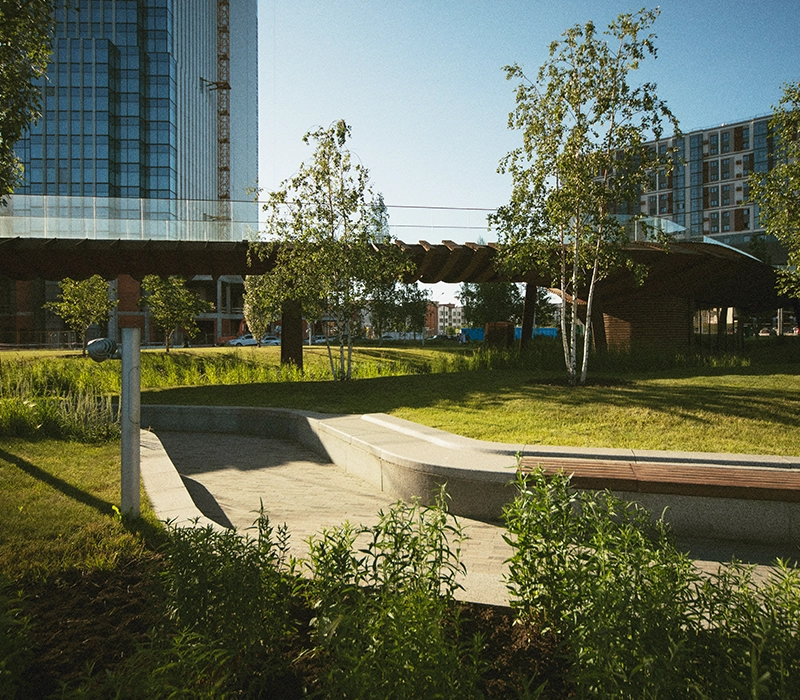
Renewable energy integration further lowers carbon intensity, while a considered approach to sustainable master planning ensures that green space, mobility and daylight are woven into the fabric of the environment rather than added as afterthoughts.
Together, these features position the destination among the leading Sustainable business hubs India has to offer, where environmental performance and commercial performance reinforce one another.
Sustainability as Competitive Advantage
For businesses choosing where to locate, a green address is now a strategic signal. It communicates foresight to clients, care to employees and discipline to investors. In a market where differentiation is difficult, a genuinely sustainable workplace becomes a competitive edge that is hard to replicate.
The green premium, then, is not simply about certification badges. It is about aligning long-term value creation with the expectations of a world moving decisively toward a low-carbon future. The buildings that embrace this shift will not only lead in sustainability. They will lead on value.